
Compressor protection case study, multi-site grocery operation
Compressor replacements: eleven in two years, then none.
A pattern of repeated compressor replacements became a series of routine service corrections. The same sites reported no replacements in the first year of monitoring.
Download the two-page study (PDF)compressor replacements: two years before vs. the year after
compressor-protection monitoring began
typical billed cost of one replacement, including crane
estimated replacement spend avoided in year one
Eleven replacements in two years. None in the year since.
 The two-page field studyDownload the PDFKalder by
The problem.
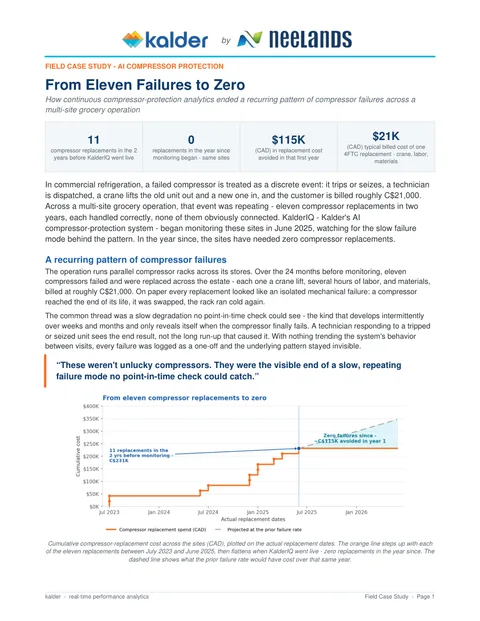
Eleven compressors were replaced between July 2023 and June 2025. Each replacement restored operation, but an intermittent operating problem kept developing between visits and putting the next compressor at risk.
What happened.
- Watch the compressors between visits. KalderIQ began continuous compressor-protection monitoring across the sites in June 2025.
- Send technicians to early distress. Analytics flagged compressors operating outside their expected envelope. Technicians investigated and made routine corrections before a replacement was needed.
- Compare the same sites a year later. The sites reported zero compressor replacements in the first year of monitoring, against eleven in the previous two years.
The result.
The same sites went from 5.5 compressor replacements a year to none. Technicians did the work; KalderIQ told them where and when to look.
How the numbers were worked out.
Eleven replacements over two years is 5.5 a year. At about C$21,000 each, including crane, labor and materials, that is C$115,500 a year, rounded to C$115,000. This is avoided spend at the previous rate, before subscription and corrective-service costs. The result covers one year of follow-up from June 2025. It is a field account from one operation, not a controlled study, and unrelated equipment failures remain possible. The customer’s name is withheld. Results are specific to this operation.
Seeing the same problem in your stores?
We’ll look at your equipment, your alarm response and what it would take to catch this earlier.