
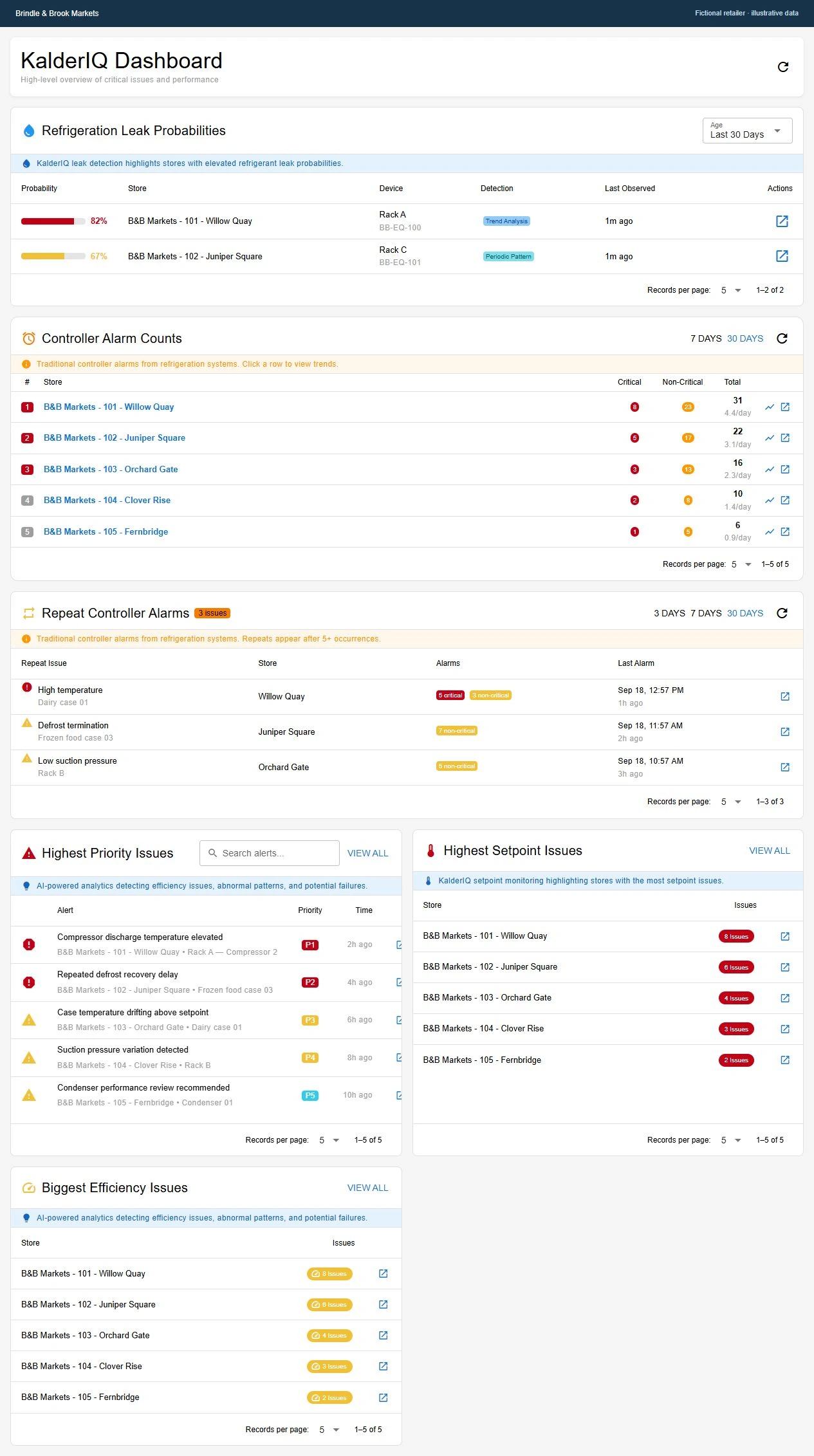
KalderIQ
Know which store needs a technician, and why.
Leak detection, compressor protection, controller-offline alerts and setpoint audits for every connected store.
- Refrigerant leak detection
- Compressor protection
- Controller-offline alerts
A staffed alarm desk, analytics that find problems early, and the access your team and contractors need to act on them. Use one, or put them together, from a single store to a national chain.
Know which store needs a technician, and why.
Leak detection, compressor protection, controller-offline alerts and setpoint audits for every connected store.
Every step is logged. Your escalation list and rules are agreed per store before go-live. Example times are illustrative.
A person answers every alarm, day or night.
A staffed alarm desk that watches your stores around the clock and calls the right people.
No shared controller passwords. Each user reaches only the stores they are assigned.
Check the controller before anyone drives.
Secure remote access to supported store controllers for your team and your contractors.
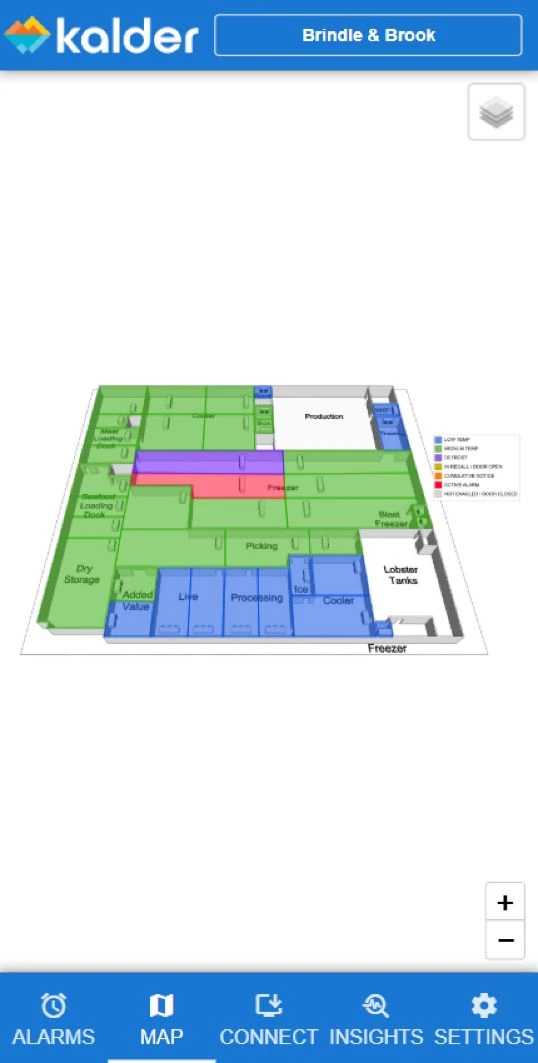
Alarms and store context on the technician’s phone.
Alarms, store maps, temperature trends and remote access in your technicians’ pockets.
Case temperature limits and exclusions are agreed per store before the first event.
Earn from demand response without warm cases.
Plan demand-response events across stores and follow each store through recovery.
Alarm Monitoring answers alarms as they happen, day and night. KalderIQ finds the problems that haven’t become alarms yet: leaks, compressor distress, silent controllers and setpoint drift. Most grocers start with both.
Remote Connect and Kalder Mobile let your team and contractors act on what they see without driving to the store first. Adaptive Load Shed is for stores taking part in utility demand-response programs, with electricity meters read over Modbus or BACnet.
Kalder works with Copeland E2 and E3, Danfoss and Micro Thermo controllers, plus BACnet and Modbus devices.
Read the buyer’s guideThe problems that cost grocers the most rarely start as an alarm. They start as a pattern in the controller data.
Leak probability, estimated leak rate and history for every connected rack.
Distress flagged between service visits, before a replacement.
Know when a store stops reporting, not just when it alarms.
Case and rack settings checked against your configured corporate standards.
The stores and cases that keep alarming, and the cause behind them.
Leaks, compressors, controllers and alarms on every rack, in one ranked view.
A 30-minute walkthrough with someone who knows refrigeration. Bring your store list and controller types; we’ll tell you what connects and where we’d start.