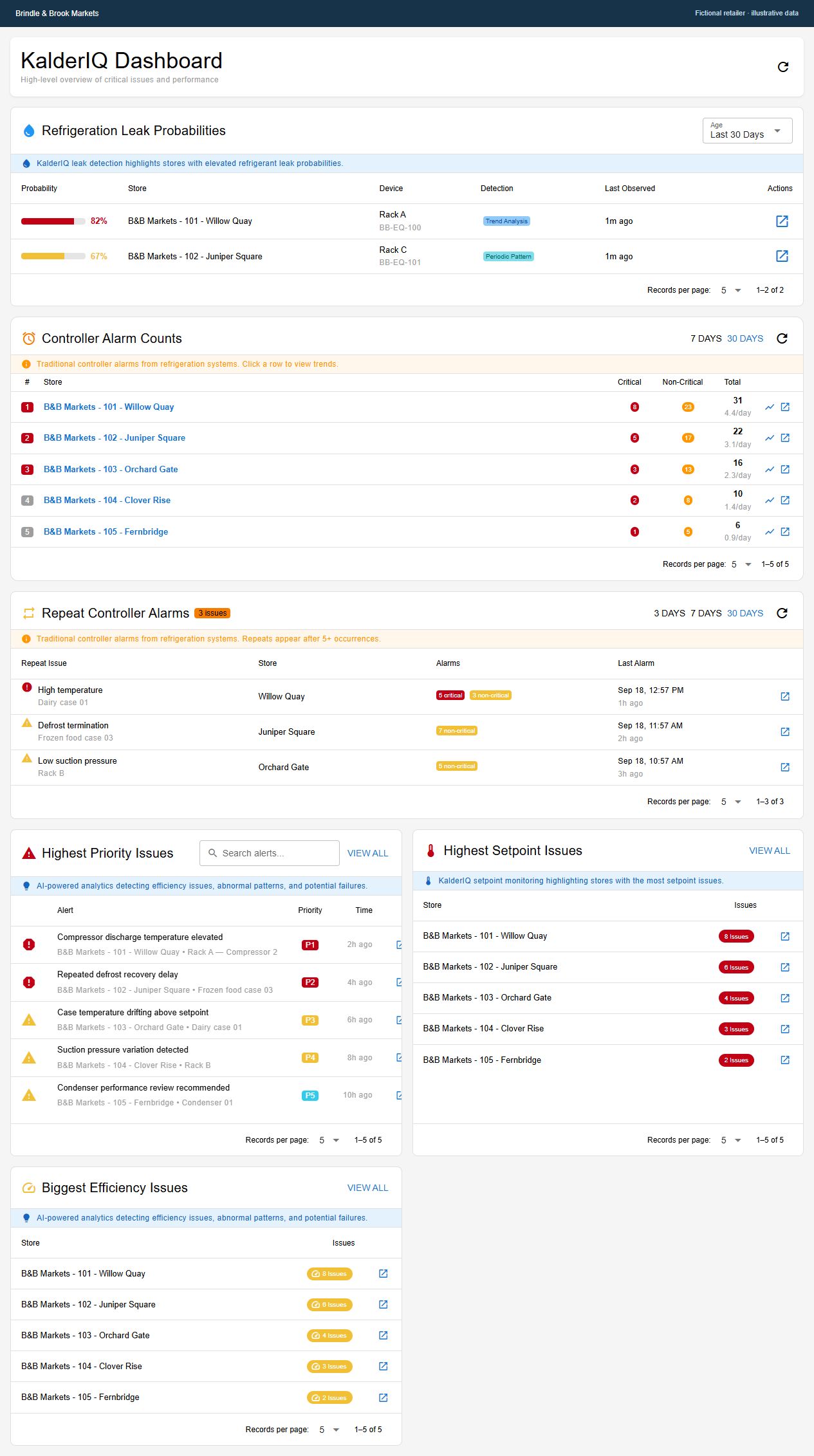
Refrigerant leak detection.
Each rack gets a leak probability, the detection method behind it, an estimated leak rate and when the loss was last observed. In one distribution warehouse, KalderIQ flagged an active loss within two weeks of going live. Three years of top-ups had never pinned it down.
Compressor protection.
Analytics compare each compressor against its expected operating envelope and surface developing distress between service visits. Your technician gets a reason to look before the crane and the replacement bill arrive. One multi-site grocer went from eleven compressor replacements in two years to none in the following year.
Controller-offline alerts.
A controller that stops communicating can’t send its own alarm. KalderIQ checks connectivity independently and tells you when a store goes quiet, so missing data is treated as a problem rather than a calm night.
Setpoint management.
Compare case and rack settings with your configured corporate standards. Find deviations, missing alarm thresholds and settings that waste energy, store by store, then correct them through your normal procedures.
Repeat-alarm analysis.
See which stores and cases keep alarming, not just the latest notification. A case that alarms every week usually has a setpoint, defrost or equipment problem worth fixing once.
Commissioning and equipment verification.
When a store comes online, or after a remodel, check sensor status, equipment features and setpoint analysis. Confirm the site is properly monitored before you rely on it.
Energy and meter data.
Connect store electricity meters over Modbus or BACnet and see demand and consumption next to the refrigeration findings that drive them.
Reports your team will actually read.
High-priority, leak, alarm, setpoint, commissioning and full-site reports. Export or email them, or schedule saved reports so the right people get them every week.